Categories
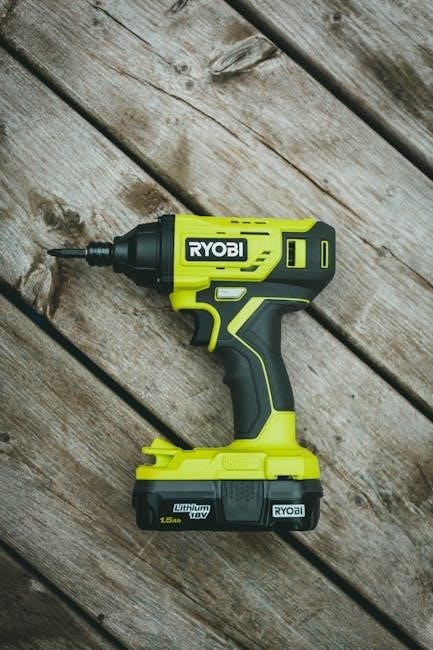
Welcome! This detailed manual provides essential guidance for Ryobi tool owners, covering operation, maintenance, safety, and troubleshooting for optimal performance and longevity;

Ryobi tools are designed for a wide range of home improvement and DIY projects, offering versatility and power. Before operation, familiarize yourself with the specific features of your Ryobi model. Recognizing the tool’s intended use – whether it’s cutting, drilling, sanding, or another application – is crucial for safe and effective operation.
Understanding the tool’s capabilities and limitations prevents damage to both the tool and the workpiece. Referencing the model number (found on the tool’s housing) is vital when seeking specific information or replacement parts. Ryobi consistently updates its product line, so accessing the correct manual for your exact model is paramount. Proper understanding ensures a positive user experience and extends the tool’s lifespan.

Finding the correct manual for your Ryobi tool is straightforward. Start by identifying the complete model number, typically located on a data plate affixed to the tool’s housing. Once you have this, visit the official Ryobi website and navigate to their support or manuals section. Utilize the search function, entering your model number for precise results.
Alternatively, numerous online resources, like ManualsLib and others, archive Ryobi manuals. However, always verify the manual’s authenticity and ensure it corresponds to your specific model. Downloading a PDF version allows for convenient offline access. Remember, using the wrong manual can lead to improper operation and potential safety hazards.
Prioritize safety when operating any Ryobi tool. Always wear appropriate personal protective equipment (PPE), including safety glasses, hearing protection, and dust masks, as needed. Before each use, inspect the tool for damage and ensure all guards are securely in place. Disconnect the power source – battery or cord – before making adjustments or changing accessories.
Never operate tools while fatigued or under the influence of drugs or alcohol. Maintain a clean and well-lit work area, free from distractions. Be mindful of bystanders and keep them at a safe distance. Read and understand all warnings and instructions in this manual before operation to prevent injury.
Familiarize yourself with your Ryobi tool’s parts for safe and effective operation. This section details each component, from the motor housing and trigger switch to the chuck or blade assembly. Diagrams illustrate the location of key parts, aiding in assembly, maintenance, and repair. Understanding the function of each component is crucial for proper usage.
Identifying parts accurately allows for correct accessory installation and troubleshooting. Refer to the exploded view diagrams for a comprehensive visual guide. Knowing the specific names of components simplifies communication when ordering replacement parts or seeking technical support.
Essential components include the motor, providing the power; the battery (for cordless models), supplying energy; and the switch, controlling operation. The chuck or blade attachment secures accessories, while the handle ensures a secure grip. Safety features like guards and locks are also vital.
Locate the model and serial number plate – crucial for support and warranty claims. Understand the function of each part; for example, the variable speed dial adjusts performance. Proper identification aids in maintenance, repairs, and ordering correct replacement parts, maximizing tool lifespan and usability.
Ryobi tools utilize a specific naming convention. Model numbers, like CFS1501 or CSB131, indicate the tool type and features. Prefixes often denote the series (e.g., P for ONE+). Understanding these codes simplifies parts identification and accessory selection.

The manual frequently references specific terms for components – “chuck,” “guard,” “switch.” Familiarizing yourself with this terminology ensures accurate comprehension of instructions. Online resources and parts diagrams utilize this same nomenclature. Deciphering these codes streamlines troubleshooting and communication with Ryobi support, leading to efficient repairs and optimal tool performance.

Prior to initial use, carefully unpack your Ryobi tool and verify all components are present. Refer to the parts list within this manual or the online diagrams. Some tools require minor assembly, such as attaching handles, guards, or side grips.
Always use the provided hardware and follow the step-by-step instructions precisely. Do not over-tighten screws or bolts. Ensure all parts are securely fastened before operation. Improper assembly can compromise safety and tool performance. If encountering difficulties, consult the Ryobi customer support resources for assistance before proceeding.
Before each use, inspect the Ryobi tool for any damage or loose parts. Ensure the work area is clear and well-lit. Always wear appropriate safety gear, including eye protection and hearing protection. Familiarize yourself with the tool’s controls and functions before starting any project.
Follow the specific operating procedures outlined for your model. Apply consistent pressure and maintain a firm grip. Avoid forcing the tool, allowing it to perform the work at its own pace. Disconnect the power source or remove the battery when changing accessories or performing maintenance.

For corded tools: Ensure the power switch is in the “off” position before plugging into a power outlet. Verify the outlet voltage matches the tool’s requirements. To start, firmly depress the trigger switch; release it immediately to stop. For cordless tools: Insert a fully charged battery pack, ensuring it clicks securely into place. Press and hold the trigger to initiate operation, releasing it for immediate shutdown.
Always allow the tool to come to a complete stop before setting it down or storing it. Never attempt to override the safety mechanisms. If the tool fails to start, consult the troubleshooting section.
Maintain a firm grip on the tool during operation, utilizing both hands when possible for enhanced control and stability. Apply consistent, moderate pressure; avoid forcing the tool, allowing it to perform the work at its own pace. Always wear appropriate safety gear, including eye protection and hearing protection, as needed.
Ensure the workpiece is securely clamped or supported. Follow the recommended cutting depth or speed settings for the material being worked with. Regularly inspect the tool for any signs of damage or wear, and discontinue use if issues are detected.
Regular maintenance is crucial for extending the life and ensuring the optimal performance of your Ryobi tool. After each use, inspect the tool for damage, loose parts, and debris. Cleaning is paramount; remove sawdust, wood chips, or other materials promptly.

Periodically check and tighten all screws and fasteners. Lubricate moving parts as recommended in the specific model’s manual, using appropriate lubricants. Store the tool in a dry, secure location, away from extreme temperatures and humidity. Proper storage prevents corrosion and damage.
Maintaining cleanliness is vital for your Ryobi tool’s longevity. Always disconnect the battery or unplug the cord before cleaning. Use a dry cloth to wipe down the tool’s exterior, removing dust and debris. For stubborn dirt, a mild detergent solution can be applied to a cloth, avoiding direct spraying onto the tool.
Pay close attention to vents and cooling areas, ensuring they are free from obstructions. Never submerge the tool in water or any other liquid. After cleaning, ensure the tool is completely dry before storage or use. Regular cleaning prevents overheating and ensures efficient operation.
Proper lubrication extends the life of your Ryobi tool and ensures smooth operation. Refer to your specific model’s manual for recommended lubrication points. Generally, gears and moving parts benefit from a light coating of Ryobi-approved lubricant, or a comparable lithium-based grease.
Apply lubricant sparingly, avoiding over-application which can attract dust and debris. Never use WD-40 or similar penetrating oils as they can damage internal components. Regularly inspect lubrication points and reapply as needed, especially after heavy use or exposure to harsh conditions. Consistent lubrication minimizes friction and wear.

Encountering problems? This section addresses frequent issues with Ryobi tools. Before seeking repair, check basic elements like power source, battery charge (for cordless models), and proper assembly. If the tool doesn’t start, verify the safety lock is disengaged and the battery is securely connected.
For mechanical failures, inspect for loose parts or obstructions. Do not attempt complex repairs yourself; consult a qualified technician. Refer to the manual’s dedicated troubleshooting section for model-specific guidance. Ignoring problems can lead to further damage and void your warranty.
Is your Ryobi tool failing to power on? First, confirm the power source is functioning correctly – check the outlet or extension cord. For corded tools, inspect the power cord for damage. With cordless tools, ensure the battery is fully charged and properly inserted into the tool. A blinking battery indicator often signals low charge or a faulty battery.
If issues persist, try a different battery (if available) to isolate the problem. Never attempt to repair a damaged power cord yourself; seek professional assistance. Always disconnect the tool from the power source before inspecting or changing components.
Experiencing unusual noises or resistance during operation? Mechanical failures can range from simple issues like a jammed mechanism to more complex problems within the gear system. Immediately stop using the tool if you detect abnormal vibrations or sounds. Inspect the work area for obstructions that might be causing the jam.
Do not force the tool to operate; this can worsen the damage. Check for loose screws or components. Never disassemble the tool beyond what is outlined in the manual. For significant mechanical issues, contact Ryobi customer support or a qualified repair technician for assistance and proper diagnosis.
Ryobi cordless tools utilize various battery platforms, including Lithium-Ion. Ensure compatibility between your tool, battery, and charger – using incorrect components can cause damage or pose a safety risk. Always inspect batteries for physical damage before use; discard damaged batteries responsibly.
Charging should occur in a well-ventilated area, away from flammable materials. Never overcharge batteries. Ryobi chargers often feature automatic shut-off functionality. Refer to your specific charger’s manual for detailed instructions and safety precautions. Proper battery care extends tool life and ensures optimal performance.

Ryobi offers a range of battery technologies, primarily focusing on Lithium-Ion (Li-Ion) for cordless tools. These batteries are known for their high energy density, low self-discharge, and lack of memory effect. Compatibility is crucial; 18V batteries are generally compatible within the 18V ONE+ system, but always verify.
40V batteries are exclusive to the 40V line. Using an incompatible battery can damage the tool or battery itself. Check the voltage and platform markings on both the battery and tool before use. Ryobi continues to innovate, so consult the official Ryobi website or manual for the latest compatibility information.
Always use a Ryobi-specified charger for your battery type to ensure optimal charging and prevent damage. Charge batteries in a well-ventilated area, away from flammable materials. Do not expose the charger or battery to water or extreme temperatures.
Never attempt to disassemble the battery pack or charger. A complete charge is indicated by the charger’s light changing color (refer to your charger’s manual). Disconnect the charger when not in use. Avoid short-circuiting the battery terminals. Improper charging can pose a fire hazard or reduce battery lifespan.

Ryobi tools are backed by a comprehensive warranty, protecting against defects in materials and workmanship. The standard warranty period typically ranges from one to three years, varying by product and region. Proof of purchase is required for all warranty claims.
The warranty does not cover items damaged through misuse, abuse, normal wear and tear, or unauthorized modifications. To initiate a claim, contact Ryobi customer support or visit their website for detailed instructions. Warranty service is performed by authorized Ryobi service centers.
Ryobi provides extensive customer support through multiple channels, ensuring assistance is readily available. Their official website features a comprehensive FAQ section, downloadable manuals, and troubleshooting guides. A dedicated customer service team can be reached via phone or email, offering expert advice and resolving issues promptly.
Online forums and communities provide a platform for Ryobi users to share experiences and solutions. Ryobi’s social media channels also offer support and updates. Access to parts diagrams, replacement parts ordering, and authorized service center locations are conveniently available online, enhancing the ownership experience.
Ryobi tools utilize serial numbers and model codes for identification and warranty verification. The model code, typically found on the tool’s label, specifies the exact tool type and features. The serial number, a unique identifier, is crucial for tracking manufacturing date and warranty status.
Locating these codes is essential for accessing specific manuals, ordering replacement parts, and contacting customer support. Ryobi uses these codes to ensure accurate assistance and parts compatibility. Understanding these identifiers streamlines service requests and helps maintain accurate records of your Ryobi tool’s history.
Ryobi provides extensive online resources for owners, including downloadable manuals and comprehensive support materials. The official Ryobi website hosts a searchable database of manuals, categorized by tool model. Users can easily find their specific manual by entering the model number or browsing the tool categories.
Beyond manuals, Ryobi’s online support includes FAQs, troubleshooting guides, and how-to videos. A dedicated customer support portal allows users to submit inquiries and access assistance from Ryobi representatives. These digital resources offer convenient and readily available support, enhancing the ownership experience.
Maintaining your Ryobi tool often requires replacing worn or damaged parts. Ryobi offers detailed parts diagrams online, allowing owners to identify the specific components needed for repairs. These diagrams are typically available on the Ryobi website, categorized by tool model number, ensuring accurate part identification.
Genuine Ryobi replacement parts can be purchased through authorized retailers or directly from the Ryobi website. Using authentic parts guarantees compatibility and maintains the tool’s performance and safety standards. The online store provides a convenient way to order parts, with options for shipping directly to your location.